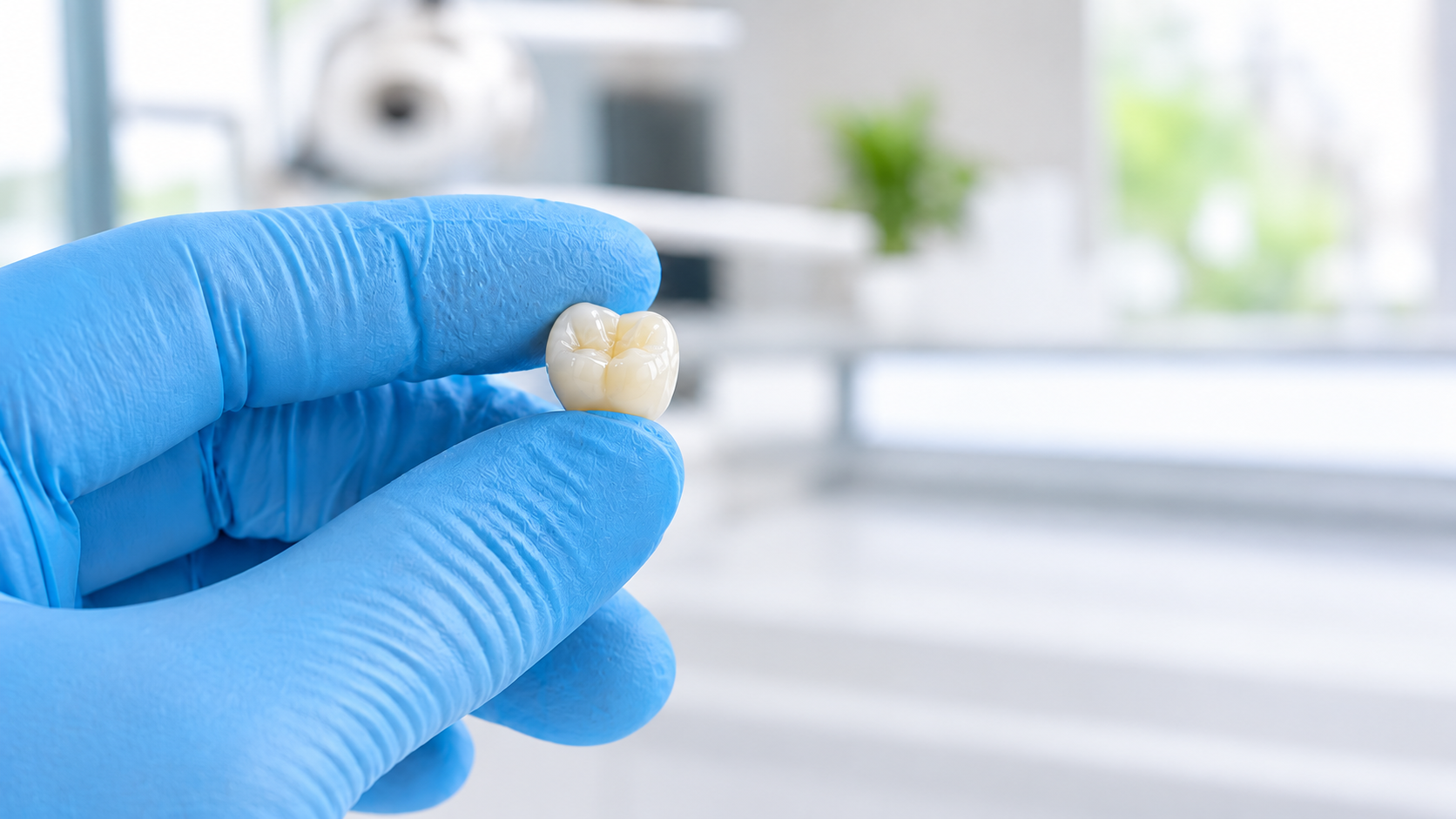
A dental crown is a custom cap that covers a damaged, weakened or root canal treated tooth to restore its shape, strength and appearance. At Burlington Family Dentists on Plains Road East in Burlington, crowns are lab-made in zirconia or all-ceramic and designed from a Trios 3 digital scan for a natural fit and look.
A Crown in Plain Language
- A crown, often called a cap, covers the whole visible part of a tooth above the gum line.
- Crowns protect teeth that are cracked, heavily filled, worn down or treated with a root canal.
- At our clinic, every crown is made by a dental lab in zirconia or all-ceramic, two metal-free materials.
- The dental crown procedure includes an exam, tooth shaping, a digital scan, a temporary crown and final cementing.
- Daily brushing, flossing and regular checkups help protect both the crown and the tooth under it.
If you have been told you need a crown, or you are simply wondering what is a dental crown and whether it is the right fix for a broken tooth, this guide walks you through it step by step. It is written for patients and parents in Burlington, Oakville, Hamilton and Waterdown who want clear answers before they sit in the chair.
What Is a Dental Crown and How Does It Work?
So, what is a dental crown? It is a tooth-shaped restoration that fits over your natural tooth like a thimble over a fingertip. Once it is cemented in place, it becomes the new chewing surface and outer wall of that tooth.
According to the Canadian Dental Association, a crown is a cap that protects a natural tooth and can also improve the look of a tooth that is discoloured or misshapen. Because it covers the tooth completely, a crown holds weakened tooth structure together and spreads biting forces more evenly.
Dental Cap vs Crown: Is There a Difference?
Many patients search for dental cap vs crown because they hear both words at the dentist's office. There is no clinical difference: "cap" is the everyday word and "crown" is the dental term for the same restoration.
You may also see the phrase dental cap crown used online, which simply joins the two names. Whether you call it a cap or a crown, the goal is the same: cover and protect a tooth that a filling alone can no longer support.
What a Dental Tooth Crown Is Not
A dental tooth crown is different from a veneer or a filling, and the difference matters when you are weighing options:
- Filling: repairs a smaller area of decay inside the tooth and leaves most of the natural tooth exposed.
- Veneer: a thin shell bonded only to the front surface of a tooth, mainly for appearance.
- Crown: covers the entire visible tooth, so it is chosen when strength and protection are needed, not only looks.
Who Needs a Dental Crown?
Crowns are recommended when a tooth is still present but too damaged or weak to work well on its own. Your dentist will look at how much healthy tooth is left and how much biting force that tooth handles.
Common reasons for a crown include:
- A cracked or broken tooth that could split further when you chew.
- A large filling that leaves only thin walls of natural tooth around it.
- A tooth treated with a root canal, especially a back tooth that takes heavy chewing pressure.
- A badly worn tooth, for example from grinding or clenching.
- A discoloured or misshapen tooth where a crown is the most suitable way to restore shape.
- A dental implant that needs a visible tooth on top, or a bridge that replaces a missing tooth.
If a crown is protecting a tooth after a root canal, it is part of the same plan as your root canal treatment in Burlington. If it sits on an implant, it completes your dental implants in Burlington treatment.
Choosing a Dental Crown Material
The dental crown material affects how the crown looks, how strong it is and where in the mouth it works best. At Burlington Family Dentists, crowns are made in two materials: zirconia and all-ceramic.
Zirconia Dental Crown
A zirconia dental crown is made from a very strong ceramic material. It is a common choice for back teeth that handle heavy chewing, and for patients who clench or grind.
Many patients who choose a zirconia dental crown for a molar are surprised by how natural it looks. Zirconia can be shaded to blend with your natural teeth, so you do not have to give up a natural look to get strength. Your dentist will match the shade to the teeth around it before the crown is made.
All-Ceramic Crowns
All-ceramic crowns are often chosen for front teeth, where light passing through the tooth matters most. Ceramic reflects light in a way that closely resembles natural enamel.
Because both options are metal-free, the edge of the crown can be shaded to blend in at the gum line.
How Your Dentist Picks the Right Dental Crown Material
There is no single best dental crown material for everyone. Your dentist will consider:
- where the tooth sits in your mouth and how much force it takes when you chew
- how much natural tooth is left to support the crown
- whether you grind or clench your teeth
- how the crown needs to match the teeth beside it
The Dental Crown Procedure Step by Step
Knowing what happens during the dental crown procedure makes the appointment far less stressful. Every crown at our clinic is lab-made, so the process is planned around the time the dental lab needs to craft your final crown. Timelines depend on your case and are reviewed with you before treatment begins.
Step 1: Exam and Digital X-Rays
Your dentist examines the tooth and takes digital X-rays to check the roots, the surrounding bone and any decay under old fillings. This confirms that a crown is the right treatment and not a filling, root canal or extraction.
Step 2: Freezing and Tooth Shaping
The area is frozen with local anesthesia so you are comfortable. Your dentist then removes any decay and gently reshapes the tooth so the crown can fit over it without feeling bulky.
If you feel anxious about dental work, nitrous oxide (laughing gas) is available for anxious adults to help you relax during treatment.
Step 3: Digital Scan With the Trios 3 Scanner
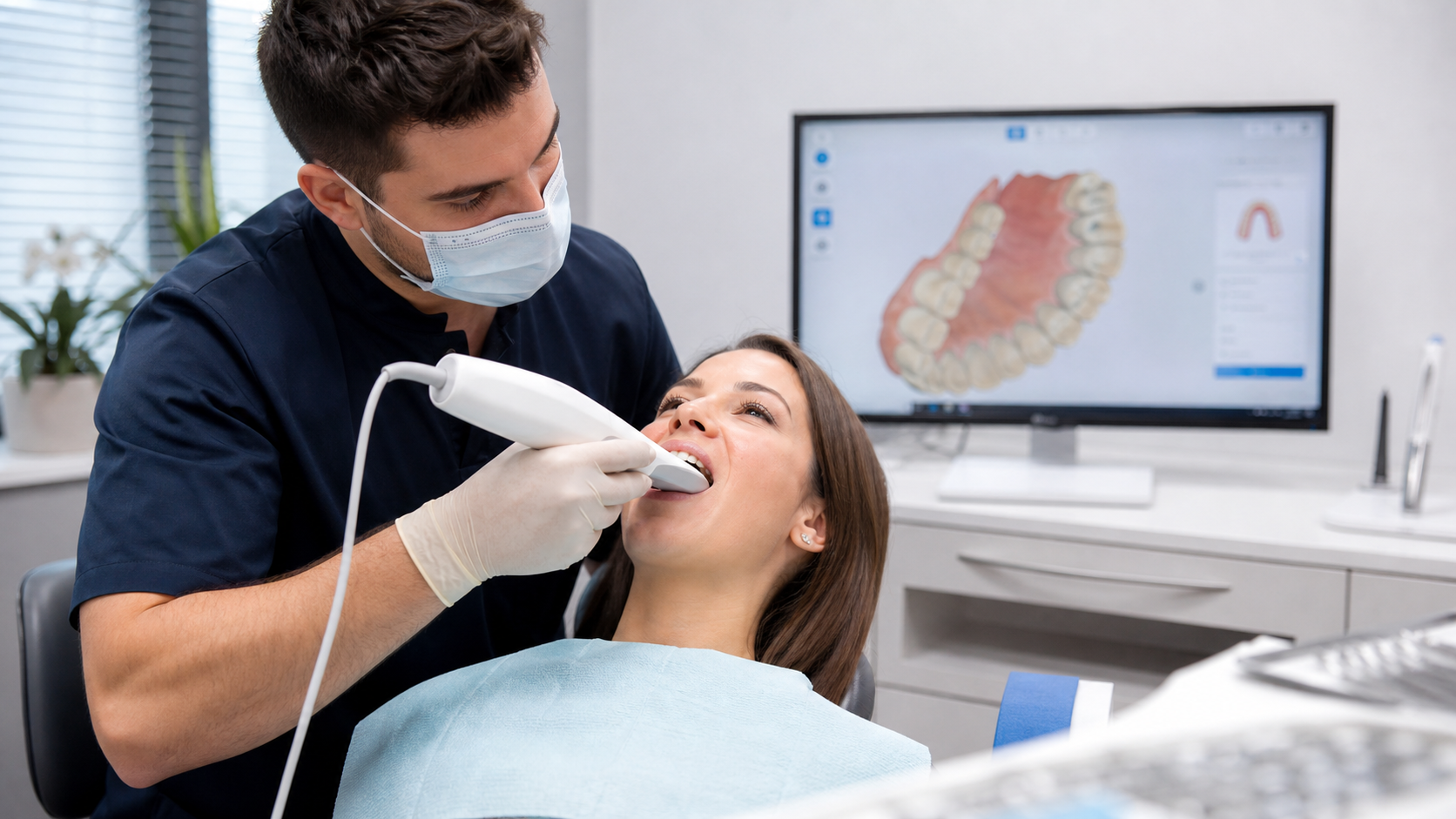
Instead of messy impression trays, we use the Trios 3 digital scanner to capture a detailed 3D image of the shaped tooth and your bite. The dental lab uses this scan to design a crown that fits your tooth and lines up with your other teeth.
Step 4: Temporary Crown
A temporary crown is placed to protect the shaped tooth while the lab makes your final crown. It keeps the tooth covered, helps with chewing and holds space so the teeth beside it do not shift. Our cluster guide on how long does it take for a crown to feel normal explains what a temporary crown feels like and how to eat, brush and floss with one.
Step 5: Fitting and Cementing the Final Crown
When your lab-made crown is ready, your dentist removes the temporary, checks the fit, the colour and your bite, and makes small adjustments if needed. The crown is then cemented in place.
What Is a Dental Crown Like After It Is Placed?
Most patients find that a new crown feels slightly different at first, because the tongue notices any change in shape. Some mild sensitivity to cold or pressure is also common as the tooth and gum settle.
Call us if your bite feels high, if pain gets worse instead of better, or if the crown feels loose. For a full guide to what is normal and what is not, read how long does it take for a crown to feel normal.
How to Care for a Dental Tooth Crown
A crown cannot get a cavity, but the natural tooth underneath it still can, especially where the crown meets the gum. Good daily care protects your dental tooth crown and the tooth that supports it.
- Brush twice a day with fluoride toothpaste, paying attention to the gum line around the crown.
- Floss once a day, sliding the floss out to the side if it catches near a new crown.
- Avoid chewing ice, hard candy, pens or fingernails, which can chip a ceramic or dental cap crown.
- Do not use your teeth as tools to open packages or bottles.
- Wear a night guard if you grind, as advised by your dentist.
- Keep your regular checkups and cleanings so we can check the crown edges and your gums.
FAQs About Dental Crowns
Is a dental crown the same as a cap?
Yes. When it comes to dental cap vs crown, a cap and a crown are the same restoration. "Cap" is the everyday word patients use, and "crown" is the term dentists use. Both describe a tooth-shaped cover that fits over the whole visible part of a natural tooth or an implant.
Does getting a dental crown hurt?
The tooth is frozen with local anesthesia before it is shaped, so most patients feel pressure rather than pain during the appointment. Some mild tenderness or sensitivity to cold afterward is common while the tooth settles. Nitrous oxide is also available for anxious adults who want extra help relaxing.
Can a tooth with a crown still get a cavity?
The crown itself cannot decay, but the natural tooth underneath can, usually at the edge where the crown meets the gum. Brushing twice a day, flossing daily and keeping regular checkups help catch any problem early.
What is the difference between a crown and a filling?
A filling repairs a smaller area of decay and leaves most of the natural tooth in place. A crown covers the entire visible tooth, so it is used when a tooth is cracked, heavily filled or weakened and needs full protection.
Can a crown be placed on a front tooth?
Yes. Crowns can be placed on front or back teeth. For front teeth, all-ceramic crowns are often chosen because they reflect light much like natural enamel. Your dentist matches the shade to your neighbouring teeth.
Wondering If a Crown Is the Right Fix for Your Tooth?
Still not sure whether your cracked or heavily filled tooth needs a crown, a filling or something else? An exam with digital X-rays will give you a clear answer.
- Natural-looking, metal-free crowns: every crown is lab-made in zirconia or all-ceramic.
- No messy impressions: your tooth is captured with the Trios 3 digital scanner.
- Comfort and flexible payment: nitrous oxide for anxious adults and in-house payment plans.
Learn more about crowns and bridges in Burlington or call Burlington Family Dentists to book your exam at 1401 Plains Rd E #4, Burlington. We welcome patients from Burlington, Oakville, Hamilton and Waterdown.